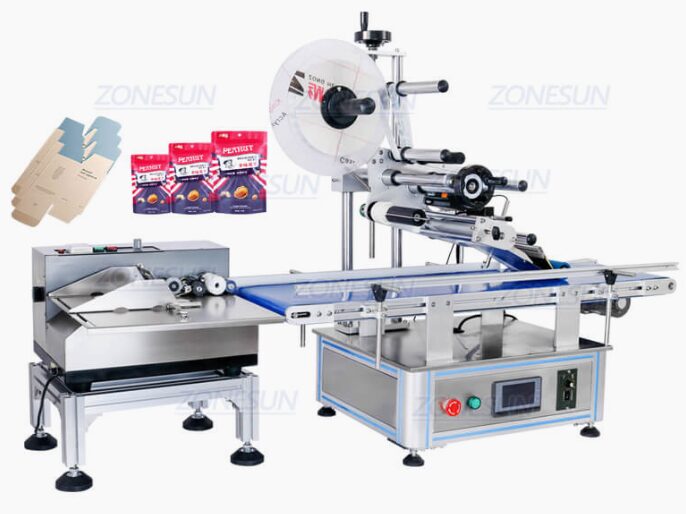
In modern packaging and manufacturing environments, a label applicator plays an essential role in ensuring products are labeled accurately and efficiently. From food and beverage packaging to cosmetics and pharmaceutical products, consistent labeling helps maintain brand image and regulatory compliance. However, similar to other mechanical devices, a label applicator may at times encounter functional issues. Understanding the common problems that occur and knowing how to fix them can help businesses maintain productivity and avoid costly downtime.
Misaligned Labels
One of the most common issues when using a label applicator is label misalignment. This problem occurs when the label is applied too high, too low, or slightly tilted on the product surface. Misaligned labels can affect the appearance of the product packaging and may also cause problems with barcode scanning, product identification, or regulatory compliance.
Common causes of label misalignment include:
1. Incorrect Label Roll Installation
If the label roll is not properly loaded, the labels may feed unevenly through the label applicator. This can cause labels to shift during application and result in inconsistent placement on the product.
2. Improper Machine Settings
The positioning settings of the label applicator must match the product size and shape. If the parameters are not adjusted correctly, the machine may apply labels in the wrong position.
3. Worn or Damaged Rollers
Over time, rollers inside the label applicator may wear down or become dirty. This can affect the smooth movement of labels and lead to uneven application.
4. Sensor Misalignment
Many modern label applicator machines rely on sensors to detect the label gap or product position. If these sensors are misaligned or dirty, the machine may trigger label application at the wrong moment.
Solutions to improve alignment include:
l Check that the label roll is correctly installed and feeding smoothly.
l Adjust the label guide and positioning settings according to the product dimensions.
l Clean rollers and sensors regularly to maintain accuracy.
l Replace worn components when necessary to ensure stable operation of the label applicator.
By performing regular inspections and adjustments, businesses can reduce labeling errors and maintain consistent label placement across the production line.
Label Jamming
Another common problem with a label applicator is label jamming. When labels become stuck inside the machine, the production line may stop completely. Jamming often happens when adhesive residue builds up on the rollers or when labels are not feeding smoothly from the roll.
Low-quality labels or incorrect label materials may also contribute to this issue. Labels that are too thin, too thick, or poorly cut may fail to separate properly from the backing paper.
To resolve label jams, start by cleaning the rollers and feed path to remove adhesive buildup. Make sure the labels being used are compatible with the label applicator specifications. It is also helpful to check the tension settings to ensure the label roll feeds smoothly during operation.
Inconsistent Label Adhesion
Sometimes labels may be applied correctly but fail to stick properly to the product surface. This can lead to labels peeling off, wrinkling, or bubbling after application. Poor adhesion can be particularly problematic for products that require long shelf life or transportation.
This issue may occur if the product surface is dusty, oily, or uneven. It may also happen if the label applicator pressure settings are too low or if the label material is not suitable for the packaging material.
To fix this problem, ensure that product surfaces are clean and dry before labeling. Adjust the pressure settings on the label applicator so that labels are applied firmly and evenly. Selecting the correct adhesive label material for your product type can also significantly improve adhesion performance.
Sensor Detection Problems
Many modern label applicator machines rely on sensors to detect labels and products during operation. If these sensors become dirty or misaligned, the machine may fail to detect labels correctly. As a result, labels may be skipped, applied in the wrong position, or wasted.
Sensor problems are usually easy to fix. Regularly cleaning the sensors with a soft cloth can remove dust or adhesive residue. Operators should also verify that sensors are properly aligned with the label edge or product position. Keeping sensors clean and properly calibrated helps maintain consistent performance from the label applicator.
Mechanical Wear And Component Damage
Over time, mechanical parts in a label applicator, such as rollers, belts, and gears, may wear out. Worn components can reduce the accuracy and reliability of the machine. For example, worn rollers may cause uneven label feeding, while loose belts may affect labeling speed.
Routine inspections are essential to identify these issues early. Replacing worn parts promptly and lubricating moving components when necessary can extend the life of the label applicator and maintain stable performance.
Conclusion
Although a label applicator is designed to provide reliable and efficient labeling, occasional problems can still occur during operation. Issues such as misaligned labels, label jams, poor adhesion, sensor errors, and mechanical wear are among the most common challenges. Fortunately, most of these problems can be resolved through regular cleaning, proper adjustments, and routine maintenance. By understanding how to troubleshoot and maintain a label applicator, businesses can keep their packaging lines running smoothly while ensuring consistent, professional labeling for every product.