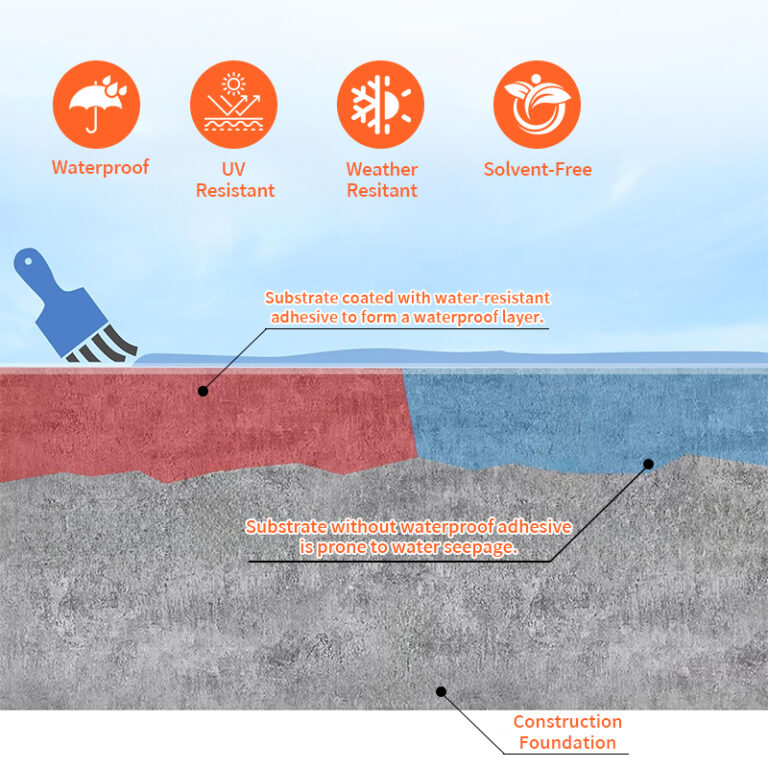
Polyurea bonds to concrete, metal, wood, and many other substrates, but it does not bond to everything. And it does not bond well to surfaces that are contaminated, weak, or improperly prepared.
Concrete must be clean, dry, and profiled. Laitance, curing compounds, form release agents, and old coatings must be removed. The surface profile must be sufficient to provide mechanical key. For concrete, this typically means abrasive blasting, shot blasting, or diamond grinding to achieve a concrete surface profile of CSP 3 to CSP 5, depending on the product and the service conditions.
Metal substrates must be abraded or primed. Polyurea adheres well to blasted steel, but smooth or oily steel will cause adhesion failure. The applicator must verify that the substrate is suitable before spraying.
Wood substrates must be dry and sound. Polyurea can bridge small cracks and irregularities, but it cannot compensate for structural weakness or excessive moisture. Wood that is green or wet should not be coated.
The substrate is not a detail. It is the foundation. If the foundation is wrong, the coating will fail regardless of how good the product is.
The Equipment Is Not Optional
Polyurea is applied with plural-component spray equipment. This equipment heats the two components to the correct temperatures, pumps them at the correct pressures, and mixes them at the gun. The mixing is instantaneous and the reaction begins immediately.
This equipment is not the same as standard airless or HVLP sprayers. It is specialized, expensive, and requires training to operate correctly. The applicator must understand how to set the temperatures and pressures, how to verify the mix ratio, and how to maintain the equipment.
Improper equipment or improper settings can result in incomplete mixing, off-ratio material, or inconsistent film thickness. Any of these can cause the coating to fail. The applicator must have the right equipment and the knowledge to use it.
The Application Is a Performance
Applying polyurea is not a slow, deliberate process. It is a performance. The applicator must move quickly and consistently, building the specified thickness in a single pass or in multiple passes without exceeding the recoat window.
The gel time of polyurea is measured in seconds. Once the components are mixed, the reaction begins. If the applicator hesitates, the material may gel in the gun or on the surface before it can be leveled. If the applicator moves too quickly, the thickness may be insufficient.
The applicator must also manage the overlap between passes. Polyurea does not melt into itself like some thermoplastics. The overlap must be sufficient to ensure a continuous membrane without thin spots or pinholes.
Temperature and humidity affect the reaction. The applicator must monitor conditions and adjust the equipment settings accordingly. A product that sprays well at seventy degrees may behave differently at fifty degrees.
The Details That Determine Success
Several details determine whether a polyurea waterproof coating installation succeeds or fails.
The primer, if required, must be compatible with the polyurea and applied correctly. Some substrates require a primer to promote adhesion. Others do not. The manufacturer’s instructions must be followed.
The thickness must be verified. Polyurea is often applied at thicknesses ranging from twenty to one hundred mils or more, depending on the application. The applicator should use a wet film gauge during application and a dry film gauge after cure to confirm that the specified thickness has been achieved.
The cure must be respected. Although polyurea cures quickly, it still requires time to reach full properties. The surface may be tack-free within minutes, but full cure may take hours or days. The coated surface should not be subjected to heavy loads, chemicals, or immersion until the cure is complete.
The inspection must be thorough. The finished coating should be inspected for pinholes, thin spots, blisters, and adhesion failures. Any defects should be repaired before the surface is placed in service.
The Bottom Line
Polyurea waterproof coating is a high-performance material that delivers exceptional results when specified and applied correctly. It cures rapidly, tolerates moisture, remains flexible, and resists chemicals and abrasion. But it demands respect. The substrate must be properly prepared. The equipment must be correct. The application must be skillful. The details must be managed. For specifiers and applicators, understanding these demands is the difference between a successful installation and a costly failure. Polyurea is not forgiving, but it is reliable. The key is to give it what it needs.