
Introduction
As the central hub for family meals and intimate gatherings with friends and loved ones, the dining room holds significance far beyond that of a mere place to eat; it serves as a vital medium for conveying the warmth of daily life and showcasing the unique stylistic identity of a home.
Modern-style dining rooms are characterized by their clean, crisp lines, a minimalist yet refined aesthetic, and flexible, practical spatial layouts—qualities that perfectly align with the contemporary pursuit of an efficient, comfortable, and stylish lifestyle.
When designing a modern dining space, many people often struggle to strike the right balance between minimalist aesthetics and everyday practical needs—specifically, how to seamlessly integrate visual beauty with effective air circulation. To address this challenge, this article delves into the key principles of modern dining room design. We will explore various dimensions—including spatial layout, table selection, color schemes, lighting design, and flooring choices—to break down a series of actionable design strategies. Our aim is to help you create a modern dining space that not only aligns with contemporary aesthetics but also embodies practicality, eco-friendliness, and a profound sense of comfort and ritual. All design inspiration presented in this article is sourced from the EClife home interior design platform.
Design Methods and Philosophy
1.Layout Planning: Open and Efficient—Tailored to the Pace of Modern Life
First and foremost, prioritize an open-plan layout that creates a moderate connection between the dining area, living room, and kitchen. This approach makes the space appear more expansive and airy. Incorporating exhaust fans can further enhance air circulation efficiency. Additionally, the inclusion of small sideboards or shelving units—serving both storage and display functions—adds a layer of practicality to the overall layout.
2.Dining Table Selection: Minimalist Aesthetics—Balancing Functionality and Style
In terms of materials, prioritize sintered stone, marble, and solid wood (specifically light-colored varieties). Sintered stone and marble are stain-resistant and easy to clean, making them ideal for frequent daily use; solid wood, with its warm and gentle texture, helps to soften the cool, hard aesthetic often associated with modern styles. Regarding design, the focus should be on simple yet sophisticated styles. Rectangular dining tables are well-suited for narrow dining spaces or larger households, while round tables are best for square-shaped rooms, as they bring family members closer together during meals and foster a cozy atmosphere. For smaller living spaces, foldable or extendable dining tables offer flexible adaptability to suit various scenarios.
3.Color Scheme: Simple and Cohesive—Highlighting Texture and Depth
For the primary color palette, prioritize light tones—such as white, off-white, light gray, and light natural wood finishes. These hues create a sense of spaciousness and openness while accentuating the minimalist aesthetic of a modern style. For secondary accents, opt for low-saturation neutral colors (gray, black, or metallic tones) or sparing touches of vibrant color (such as deep green, light blue, or caramel), using them to embellish furnishings like dining tables, chairs, and sideboards. Ensure overall color harmony by creating a visual dialogue between the walls, flooring, and furniture.
4.Lighting Decor: Layered lighting to create a warm dining atmosphere.
For the primary lighting, opt for a simple yet elegant ceiling fixture or pendant light; suitable materials include metal, glass, or fabric, aligning perfectly with a modern aesthetic. Warm white or warm yellow light is recommended, as its soft glow helps cultivate a cozy dining atmosphere, thereby avoiding the stark, clinical feel of cool white light. Supplementary lighting can be provided by pairing the main fixture with wall sconces, spotlights, or a pendant light positioned directly over the dining table; wall sconces, mounted on the dining room walls, serve to both augment the general illumination and function as decorative elements.
5.Flooring Selection: Simple and Durable, Harmonizing with the Overall Style
In terms of materials, priority should be given to ceramic tiles and engineered wood flooring, as they are stain-resistant, easy to clean, and resistant to water and moisture. Solid wood flooring offers a comfortable underfoot feel—warm and natural—and serves to soften the starkness often associated with modern design styles. For color choices, opt for light natural wood tones or pale grays to align with the overall minimalist aesthetic. Regarding color coordination, the flooring should complement the walls and furniture; ideally, it should be slightly darker than the walls to create visual depth. This approach prevents the floor color from being too dark—which could make the space feel oppressive—while also avoiding shades that are too light and prone to showing dirt easily.
Recommended Themes
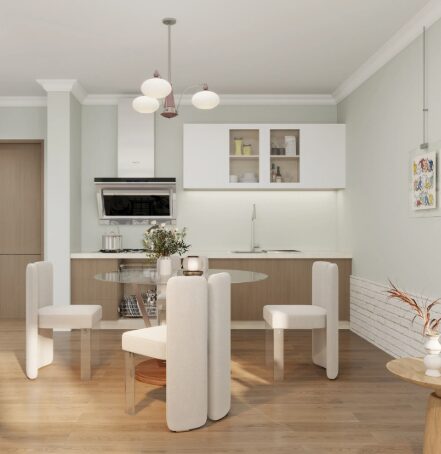
This interior design style is sourced from the EClife website. The dining area features an integrated, open-plan layout that seamlessly connects the dining space with the kitchen, visually expanding the room while facilitating excellent air circulation.
A round glass dining table was selected for this space; its transparent material minimizes visual weight, making the compact area appear lighter and more airy. Furthermore, the table’s soft, rounded contours—devoid of sharp corners—ensure safety while fostering a sense of closeness among family members, thereby creating a warm and inviting dining atmosphere. The glass tabletop is also stain-resistant and easy to clean.
The design establishes a foundation of light gray-green walls, white cabinetry, and wood-toned flooring. This low-saturation color palette feels clean and gentle, effectively highlighting the crispness of a modern aesthetic without making the space feel oppressive; simultaneously, the wood elements serve to counterbalance the cooler tones, infusing the room with a sense of warmth and texture.
For the primary lighting fixture, a multi-head pendant lamp featuring milky-white spherical shades was chosen. Its design is simple and rounded, and the diffused warm light it emits is soft, evenly illuminating the entire dining area. This approach avoids the harsh glare of direct lighting, instead cultivating a cozy and soothing ambiance for dining.
Light-toned laminate flooring was selected to harmonize perfectly with the room’s overall warm aesthetic. It effectively offsets the cooler tones of the walls and furniture while imbuing the space with a natural warmth. The wood-effect flooring helps dampen footfall noise and is both wear-resistant and easy to clean—qualities ideally suited to the dining environment, where spills and stains are common—making daily maintenance effortless and worry-free.
Summary
The core of modern dining room design lies in achieving a balance between aesthetic appeal and practical functionality through a clean and rational approach. It can be approached from the following five aspects:
Layout Planning: An open-plan kitchen-dining layout is adopted to ensure efficient and smooth circulation. This design shortens the process from food preparation to dining, while the absence of partitions enhances spatial openness and air circulation, perfectly aligning with the pace of modern living.
Dining Table Selection: A round glass dining table offers a light and transparent appearance, reducing visual heaviness while being stain-resistant and easy to clean. Paired with upholstered chairs featuring transparent frames, it combines modern minimalist aesthetics with seating comfort. The circular shape also brings family members closer together, fostering a warm and intimate atmosphere.
Color Scheme: A palette centered on light gray-green walls, white cabinetry, and wood-toned furniture creates a fresh and soft ambiance. The low-saturation colors highlight the simplicity of modern style, while the balance of warm and cool tones prevents the space from feeling dull, resulting in a harmonious and layered visual effect.
Lighting Design: A multi-head spherical pendant light with warm illumination serves as the main light source. It provides soft and even lighting for dining while enhancing a cozy and soothing atmosphere. Its minimalist form integrates seamlessly with the overall design, acting as a visual focal point without compromising the sense of openness.
Flooring Selection: Light wood flooring offers a warm tactile feel, durability, and easy maintenance. Slightly darker than the walls, it complements the furniture tones, creating natural visual layers. It avoids the heaviness of dark floors and the high-maintenance nature of very light ones, while enhancing the overall warmth and spatial depth.
If you would like to learn more about dining room design styles, feel free to visit the EClife website and consult with our designers for more detailed guidance.