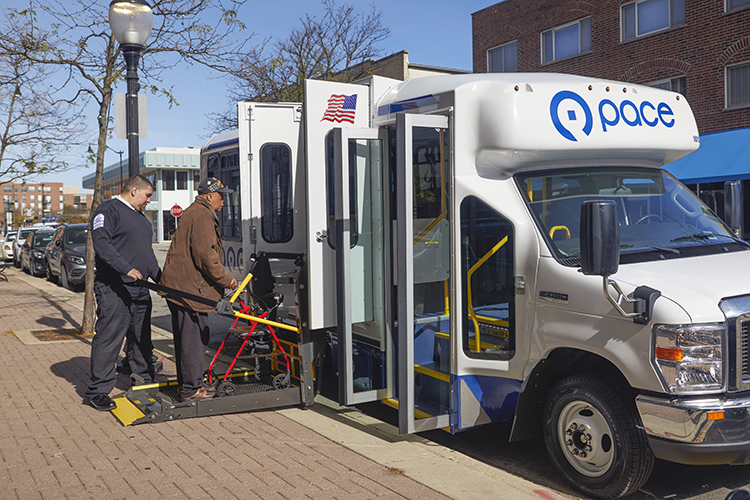
For many Americans, public transportation provides an affordable way to reach work, medical appointments, educational institutions, and community services. However, even an accessible bus or train may not meet every passenger’s transportation needs.
Some individuals have disabilities that prevent them from independently using conventional public transit. For these passengers, ADA complementary paratransit provides an alternative transportation service protected by federal law.
The Americans with Disabilities Act establishes specific requirements for eligibility, reservations, fares, operating hours, and service availability. Understanding these rules is important for passengers, transportation agencies, and organizations involved in delivering accessible transportation.
The Legal Foundation of ADA Paratransit
The Americans with Disabilities Act was signed into law in 1990. Its transportation provisions prohibit disability discrimination and require covered public transportation systems to provide accessible services.
ADA complementary paratransit is specifically addressed in federal regulations under 49 CFR Part 37.
These regulations require public entities operating covered fixed-route transit systems to provide complementary transportation for eligible individuals whose disabilities prevent them from using those services.
The Federal Transit Administration (FTA), part of the U.S. Department of Transportation, provides regulatory guidance and oversees compliance with federal transit accessibility requirements.
Importantly, ADA paratransit is a civil rights requirement, not simply an optional transportation benefit.
Eligibility Depends on Functional Limitations
A common misconception is that every person with a disability automatically qualifies for ADA paratransit.
Federal regulations establish a more specific standard.
Eligibility generally depends on whether a disability prevents an individual from independently boarding, riding, or exiting an accessible fixed-route vehicle, or from reaching or leaving the transit system under applicable conditions.
A person may qualify for all trips or only for journeys involving particular barriers.
For example, an individual might be able to use an accessible bus in some circumstances but be unable to reach a bus stop when certain environmental conditions create disability-related obstacles.
Transit agencies must evaluate eligibility according to federal requirements. Applicants also have procedural protections, including written determinations and appeal rights.
Under 49 CFR § 37.125, agencies generally must make an eligibility determination within 21 days after receiving a complete application. If they do not, presumptive eligibility applies until a decision is made.
What Service Must Transit Agencies Provide?
ADA complementary paratransit must meet standards designed to make it comparable to the fixed-route transportation it complements.
For covered bus routes, the required service area generally extends three-quarters of a mile on either side of the route.
The service must operate during the same days and hours as the corresponding fixed-route system.
Eligible passengers must be able to reserve transportation for the following day, and agencies cannot restrict journeys based on trip purpose.
The maximum ADA paratransit fare generally cannot exceed twice the full fare for a comparable fixed-route trip.
Federal regulations also prohibit capacity constraints that result in patterns of trip denials, excessive missed trips, or substantially untimely pickups.
These standards are intended to ensure that transportation is meaningfully available rather than merely offered in principle.
Passenger Rights During the Reservation Process
Scheduling is one of the most important aspects of ADA paratransit.
Under federal rules, transportation agencies must accept next-day reservations during normal business hours, with arrangements for reservations when administrative offices are closed.
Agencies may negotiate pickup times with passengers, but the negotiated time cannot be more than one hour before or after the passenger’s requested departure time.
Passengers cannot be required to schedule journeys exclusively through an online platform if doing so would prevent them from accessing the required reservation service.
Transportation agencies must also accommodate eligible personal care attendants without charging an additional fare, subject to applicable regulations.
For passengers, understanding these protections can make it easier to identify whether transportation procedures comply with federal standards.
Why ADA Compliance Matters for Transportation Operators
Operating an accessible transportation program involves legal, administrative, and logistical responsibilities.
Vehicles must meet applicable accessibility requirements. Drivers and other personnel need appropriate training, while reservation and dispatch systems must support the service standards established by federal law.
Transportation agencies may perform these functions directly or contract with private transportation companies.
However, outsourcing operations does not eliminate the public agency’s ADA obligations.
Effective transportation management therefore requires coordination between reservations, dispatchers, drivers, vehicle maintenance personnel, and agency administrators.
Additional information about transportation operations and ADA paratransit services can help organizations explore the operational requirements of accessible mobility.
Accessible Vehicles and Mobility Devices
ADA regulations address the accessibility of transportation vehicles and the treatment of passengers using mobility devices.
Technical vehicle requirements are described in 49 CFR Part 38.
Depending on the vehicle and service, accessible transportation equipment may include lifts, ramps, wheelchair securement systems, and designated spaces for mobility devices.
Transportation personnel must also follow applicable rules concerning boarding assistance and the use of accessibility equipment.
An important principle is that operators cannot impose arbitrary restrictions that exclude passengers because they use mobility devices.
Safety requirements still apply, but decisions must be consistent with federal accessibility standards rather than unsupported assumptions about disability.
When Transportation Service Falls Short
Federal regulations recognize that paratransit can become inaccessible through operational failures even when a program formally exists.
For example, recurring trip denials, excessive missed pickups, and significantly late arrivals can indicate prohibited capacity constraints.
An isolated service problem does not automatically establish a systemic violation. However, repeated operational patterns may raise compliance concerns.
Passengers who experience problems can report them through the transportation agency’s complaint procedures.
The FTA also provides information about filing ADA transportation complaints involving covered public transit services.
Documenting reservation details, scheduled pickup times, actual vehicle arrivals, and communications with the operator can help clarify what occurred.
Technology and Equal Transportation Access
Modern transportation software can support ADA paratransit operations by improving scheduling, vehicle assignments, route planning, and communication.
Automated systems can help coordinate multiple passengers with different destinations and accessibility requirements.
Yet technology introduces its own accessibility considerations.
A reservation application that is difficult to use with assistive technology, for example, may create barriers for some passengers.
Transportation agencies must consider the needs of individuals who cannot use smartphones or digital booking tools.
The FTA has also clarified that public transit agencies using ride-sourcing services to provide ADA paratransit must continue satisfying applicable federal requirements.
Operational innovation is valuable only when it preserves equal access.
The Broader Importance of ADA Paratransit
ADA paratransit is sometimes associated primarily with transportation to medical appointments. In reality, its purpose is considerably broader.
Eligible passengers may use the service to travel to workplaces, educational institutions, community centers, retail locations, social activities, and other destinations within the service area.
This distinction matters because accessible transportation supports participation in everyday life, not only access to healthcare.
The legal framework established by the ADA recognizes that transportation barriers can limit opportunities for people with disabilities.
By establishing eligibility protections and enforceable service standards, federal law provides a foundation for addressing those barriers.
The continued challenge for transportation agencies is to deliver reliable, accessible, and efficiently coordinated service while maintaining the rights guaranteed to eligible passengers.
ADA paratransit is therefore more than a specialized transportation arrangement. It is an important expression of equal access within the American public transportation system.