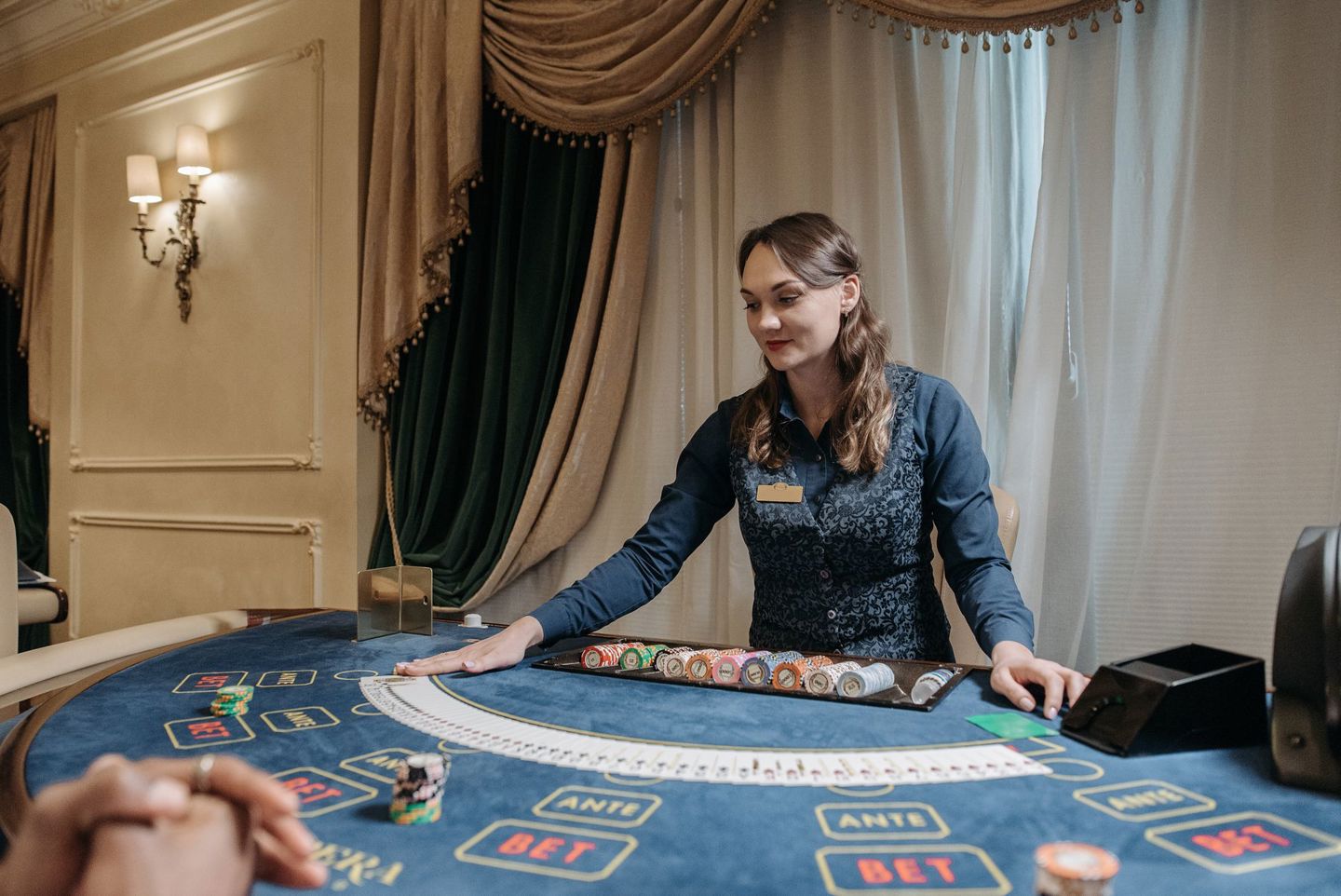
Live casino titles are more than streamed table games. They now involve full interactive game show experiences.
For the past ten years, online casinos have moved away from simply providing digital representations of table games. As streaming technology allowed people to watch others play, which became a viable form of entertainment in itself, iGaming adapted. The fruits of this are the live casino genre. Originally providing table games, they are now fully interactive game shows, which have succeeded in a vertical Netflix and its ilk have long since given up on.
The Concept of Live Casino Gaming
Any quality casino operator, wherever it may be on the globe, will now have live casino games. For example, when you log onto Betway, you can play live casino games by navigating to its dedicated sections using the intuitive user interface. From here, you can cycle through table games or game show-style events.
Live casino gaming has been around longer than many people may think. Originally, studios would place televisions showing the day’s news in the background, so people knew games were taking place in real time. Yet technology had not quite reached the levels required to make it successful. Game streams lagged, and software interfaces glitched, making it an unenjoyable experience.
It would take some time before connections, such as 4G and 5G, became fast enough to provide these to wireless devices, which had also increased their processing power by this point. Through the use of Optical Character Recognition (OCR), which could read text and card symbols or values, then transfer them to usable data on the software systems, table games could now be played in real time with live dealers, with little hindrance.
Live Casino Gameshows
Originally, this technology was used to play live table games. Yet it was not long before their popularity caused developers to take it one step further. Evolution Gaming had been on board with live casino entertainment from the start, and their title Dream Catcher was the first really popular title to deviate from the classic casino format. Released in 2017, it featured a wheel spin which provided players with various multipliers and payouts.
It was not just the game that attracted people. The production values were akin to a high-end TV game show, with great lighting, video, and audio. It was taken one step further with the studio’s next live release, Crazy Time. This introduced a host of exciting bonus rounds, such as a Cash Hunt, Coin Flip, Pachinko, and the Crazy Time round itself.
Since then, these games have become extremely popular. Even real-world licenses have queued up to have their own live game shows made. Deal or No Deal was one of the first. Hasbro’s Monopoly now has several, which bring the monocled character and his iconic game to life. On top of this are a host of ones that have been thought up by developers themselves, such as ‘Adventures in Wonderland ’, which borrows from the Lewis Carroll classic novel.
How Streaming Shelved Interactive Entertainment
These games essentially let viewers become the stars in their own show. Providing a form of interactive entertainment, this is seldom seen anywhere else outside the gaming realm. This is something that major streaming services, such as Netflix, have been attempting to capitalise on for some time.
At one point, Netflix had a host of interactive titles. They let viewers choose their own direction, deciding how people and events would play out until they reached a unique conclusion. Shows included Carmen Sandiego, and they even piloted daily game show trivia events. Arguably, the most popular was the science fiction Black Mirror: Bandersnatch.
As of December 1st, 2024, the platform began to delist these shows. It did so at a time when it began winding down its gaming studios, which had been voraciously acquired. A spokesperson for Netflix, Chrissy Kelleher, simply stated that “The technology served its purpose, but is now limiting as we focus on technological efforts in other areas.”
The Success of Live Casino Gaming
Therefore, live casinos and their developers have succeeded in an experiment that streaming services deemed a failure. Why it worked on one and not the other is unknown. The biggest difference is that, in being licensed for gambling services, casinos allow a pay-to-play format that streaming services could never match. To employ this type of game on their platforms would involve giving away prizes for free.
A lesson may also be found in the move from Netflix, which saw its gaming studios shut down. Perhaps, people don’t want games from their streaming services. Instead, they may want specific platforms for gaming, listening to music, watching movies, and in the case of iGaming, gambling and winning prizes.
This, of course, can provide lessons for the casino industry, which may not want to overstretch. As gambling becomes more mainstream, overlapping with wider streaming platforms, it should tread carefully, building on existing properties instead of moving into new markets.