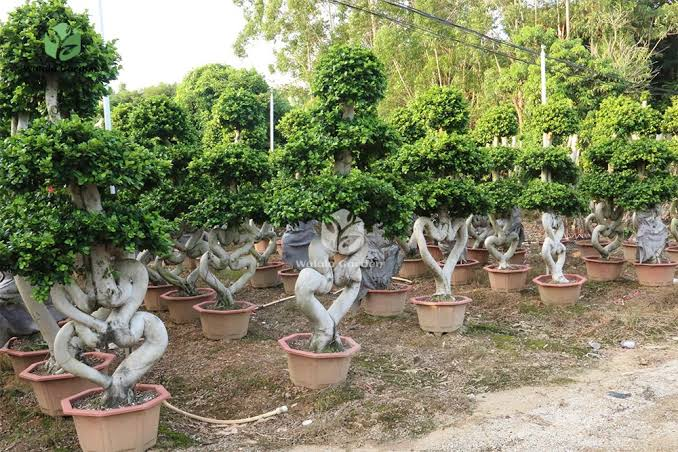
Traditional bonsai is an art of imitation. The goal is to create a miniature tree that looks as though it grew naturally in the wild, shaped by wind, weather, and time. The best bonsai do not look trained. They look discovered. The grower’s skill lies in concealing the grower’s hand.
The heart shaped bonsai operates on entirely different principles. It does not imitate nature. It imitates a symbol. The shape is immediately recognizable as a human invention, not a natural occurrence. This is why some traditionalists dismiss it. It violates the core aesthetic of bonsai, which is the illusion of natural growth.
But there is another way to see it. Bonsai has always involved shaping trees to fit human ideas of beauty. The cascade style, the windswept style, the formal upright, all are human interpretations of natural forms. The heart shape is simply a more explicit form of that same impulse. It does not pretend to be natural. It openly declares itself as art.
The Commercial Reality
Whatever purists may think, the heart shaped bonsai sells. It sells because it carries emotional meaning that a traditional bonsai does not. A tree shaped like a heart communicates something instantly. It says love, affection, commitment. A perfectly styled informal upright communicates craftsmanship and patience, but it does not say anything about the relationship between the giver and the receiver.
This commercial appeal has made the heart shaped bonsai a gateway product. Many people who would never consider buying a bonsai for themselves will buy one as a gift. Some of those recipients will become curious about bonsai and eventually move on to more traditional forms. In that sense, the heart shaped bonsai serves as an entry point into a much larger world.
How Growers Actually Create Them
Creating a heart shaped bonsai is not as simple as bending a tree into a heart and waiting. It requires selecting a species with a flexible trunk, such as ficus or Chinese elm, and training it over several years. The trunk is wired and bent into two opposing curves that meet at the top, forming the heart’s lobes, while the base of the tree forms the point.
The process is demanding. Bending too aggressively can snap the trunk. Bending too slowly can allow the wood to harden before the shape is set. The wire must be monitored and removed before it bites into the bark. And once the shape is established, it must be maintained through ongoing pruning and direction of new growth.
This is the part that most buyers do not understand. The heart shaped bonsai they purchase is not a finished object. It is a work in progress that will continue to change. Without regular maintenance, the heart will gradually lose its definition and the tree will revert to a more natural form.
The Maintenance Burden
This is where the heart shaped bonsai diverges most sharply from traditional bonsai. A traditionally styled tree can be allowed to grow somewhat freely and still look acceptable. A heart shaped bonsai cannot. Its entire identity depends on maintaining the shape.
Owners who are not prepared for this often end up with a tree that looks neither like a heart nor like a well-styled bonsai. It simply looks neglected. The disappointment is understandable. The tree was sold as a symbol, and the symbol has faded.
The solution is education. Growers who sell heart shaped bonsai should provide clear guidance on maintenance. Buyers should understand that they are taking on a project, not acquiring a decoration. With the right expectations, the heart shaped bonsai can be a rewarding and meaningful possession. Without them, it becomes a source of frustration.
Finding the Right Balance
Perhaps the most honest way to think about the heart shaped bonsai is to accept it for what it is. It is not traditional bonsai. It is a hybrid form, part horticulture, part novelty, part sentimental object. It does not need to be defended as high art, and it does not need to be dismissed as a gimmick.
It is simply a tree shaped like a heart. For some people, that is enough. They enjoy it, they care for it, and it brings them pleasure. For others, it is a compromise they are not willing to make. Both responses are valid.
The heart shaped bonsai will never be accepted by every grower. But it does not need to be. It has found its audience, and that audience continues to grow. In a world where bonsai is often seen as intimidating or inaccessible, a tree shaped like a heart offers an invitation. Some will accept it and move on. Others will accept it and stay. Either way, the tree has done its job.