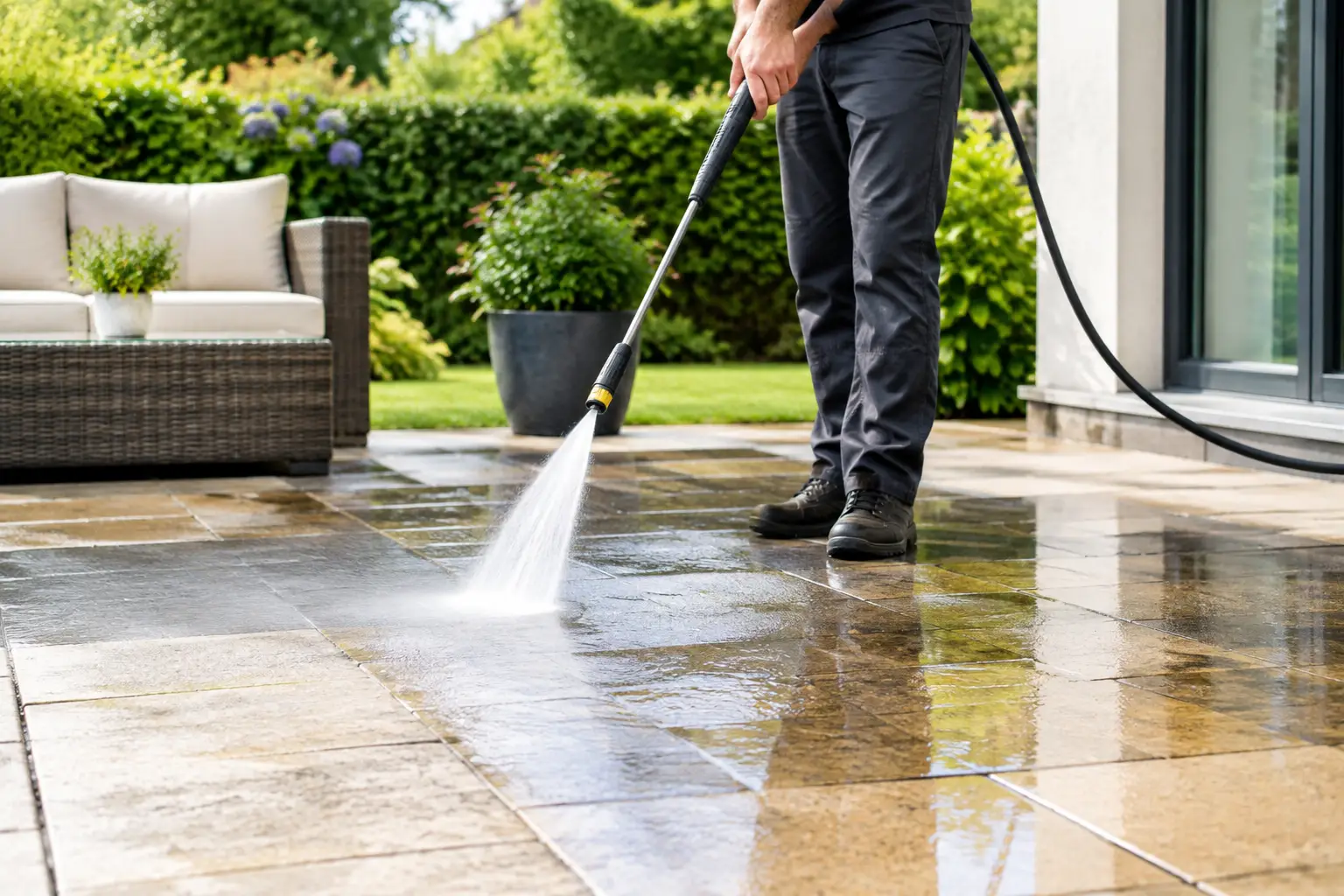
You spent a small fortune on those sandstone slabs three summers ago. They looked gorgeous for about six weeks. And then the British weather got involved, and now your patio is slowly turning into something you’d expect to find at the bottom of a canal.
Most people clean their patio either too late or never at all. But the fix is simpler than you think, and it starts with knowing how often your outdoor surfaces actually need attention.
Let’s walk through the schedule that will preserve the natural elegance and original warmth of your stone year after year.
Once a Year Is the Baseline for Most Patios
If your patio gets decent sunlight, drains well, and sits away from overhanging trees, a single annual clean will keep it in solid condition. Early spring is the sweet spot, right before you bring out the garden furniture and get your outdoor space ready for sunny days ahead.
A full year of UK weather leaves a film of grime, moss spores, and embedded grit across even the hardiest paving. That fine grit acts like sandpaper under foot traffic, gradually wearing down the surface of your stone or concrete.
Getting the slabs professionally cleaned once a year clears that abrasive layer before it causes lasting damage to the paving face or the mortar between joints.
Shaded or Damp Patios Need Cleaning Twice a Year
A north-facing patio tucked under a canopy of mature trees faces an entirely different climate from the sun-drenched slab next door. If your outdoor space gets very little sun, the moisture will sit on the stone far longer, creating the perfect conditions for moss and algae.
That constant dampness allows moss, green algae, and stubborn lichen spots to anchor deep into the stone, far beyond what a standard garden hose can rinse away.
Fallen leaves only make matters worse by releasing dark tannic acids as they decay and leaving unsightly, stubborn stains behind.
For these patios, a spring clean and an autumn clean will stop the biological growth from getting a permanent grip. Waiting a full twelve months between cleans in a shaded garden is how a £4,000 patio ends up looking like the floor of a forgotten greenhouse.
Every Nine Months Keeps High-Traffic Areas Looking Fresh
If your patio doubles as a playground, a dog run, and the main route between the back door and the shed, it’ll pick up surface dirt at a pace that makes annual cleaning insufficient.
Muddy boots, paw prints baked into warm stone by a rare afternoon of sun, and spilt drinks from weekend barbecues will all grind into porous paving surprisingly fast.
Every footstep packs those microscopic dirt particles deeper into the stone’s pores. Before long, that rich, natural colour gives way to a dull, flat haze that a broom simply glides right over.
A clean every nine months keeps you ahead of that buildup and stops the heavy-use areas from developing those telltale grey traffic lanes that make half your patio look ten years older than the other half.
Every Season Calls for a Quick Five-Minute Visual Inspection
You don’t need to book a professional clean every quarter, but you do need to walk out and actually look at your paving as the seasons change. Five minutes with a cup of tea and a critical eye will tell you whether things are on track or heading sideways.
Winter frost cycles are particularly harsh on your paving. Water seeps into hairline cracks, freezes overnight, expands, and widens the gap a fraction of a millimetre at a time. You won’t notice the damage until a corner of a slab lifts or a joint crumbles loose underfoot.
Bird droppings left sitting through a hot spell will bake into the surface and become almost impossible to remove without professional equipment. A quick visual audit each season lets you catch these issues while they’re still cheap and easy to fix.
Immediate Action Is Required the Second Spills or Grease Hit the Stone
Some messes won’t wait for your next scheduled clean. If a fat-marbled burger slides off the grill or a glass of red wine spills over your York stone, you have a brief window before those porous capillaries soak in the liquids permanently.
Natural stone absorbs fats, oils, and dark tannins within hours. Scrubbing the area with domestic soap and water usually just spreads the oil into a wider, paler halo across the slab.
A quick baking soda poultice can draw out surface-level grease if caught in minutes. However, set stains will need immediate targeted professional extraction to lift the embedded oil without stripping the stone’s natural tone.
Right Away Is When You See Black Spot Lichen or Green Algae
When green algae or dark lichen spots appear across your paving, routine maintenance is no longer enough to keep the stone clean. These organisms root themselves deep within the microscopic pore structure of sandstone and limestone.
Once anchored, a domestic pressure washer on a DIY setting will barely make a dent. Worse yet, blasting them with a high-pressure lance at close range or scrubbing with a wire brush will tear up the face of the stone and blow out your jointing sand.
The appearance of these stubborn squatters is your signal that it’s time for commercial hot-water extraction and specialised treatments to lift that growth safely.
Professional Patio Cleaning Is Required Every 12 to 18 Months for Deep Restoration
There’s a massive distinction between a light, superficial rinse and a full restoration wash. If your outdoor space hasn’t had a proper deep clean in over a year, ground-in dirt will be well beyond what your domestic equipment can handle.
While routine sweeping manages loose surface dirt, booking residential patio cleaning every 12 to 18 months delivers the deep reset your stone needs to stay pristine.
Over a year and a half, microscopic dust, traffic film, and weather residue settle deep into the stone’s capillaries, well beyond the reach of standard domestic equipment.
Professional specialists use calibrated hot-water extraction and rotary surface cleaners that lift years of embedded grime evenly across every slab.
This periodic deep wash restores the stone’s original warmth without damaging the mortar or the delicate joints, or leaving the ugly zebra-stripe patterns typical of handheld washers.
Combining a 12-to-18-month professional restoration with quick seasonal checks ensures your outdoor space always looks as pristine as the day it was laid.
Conclusion
With a simple schedule on your calendar, caring for your stone is completely hassle-free. So, book that initial clean before the barbecue season begins, step outside, and celebrate an outdoor space that truly reflects the elegance you envisioned!